History10 min
Gandhara: The Crossroads of Civilizations
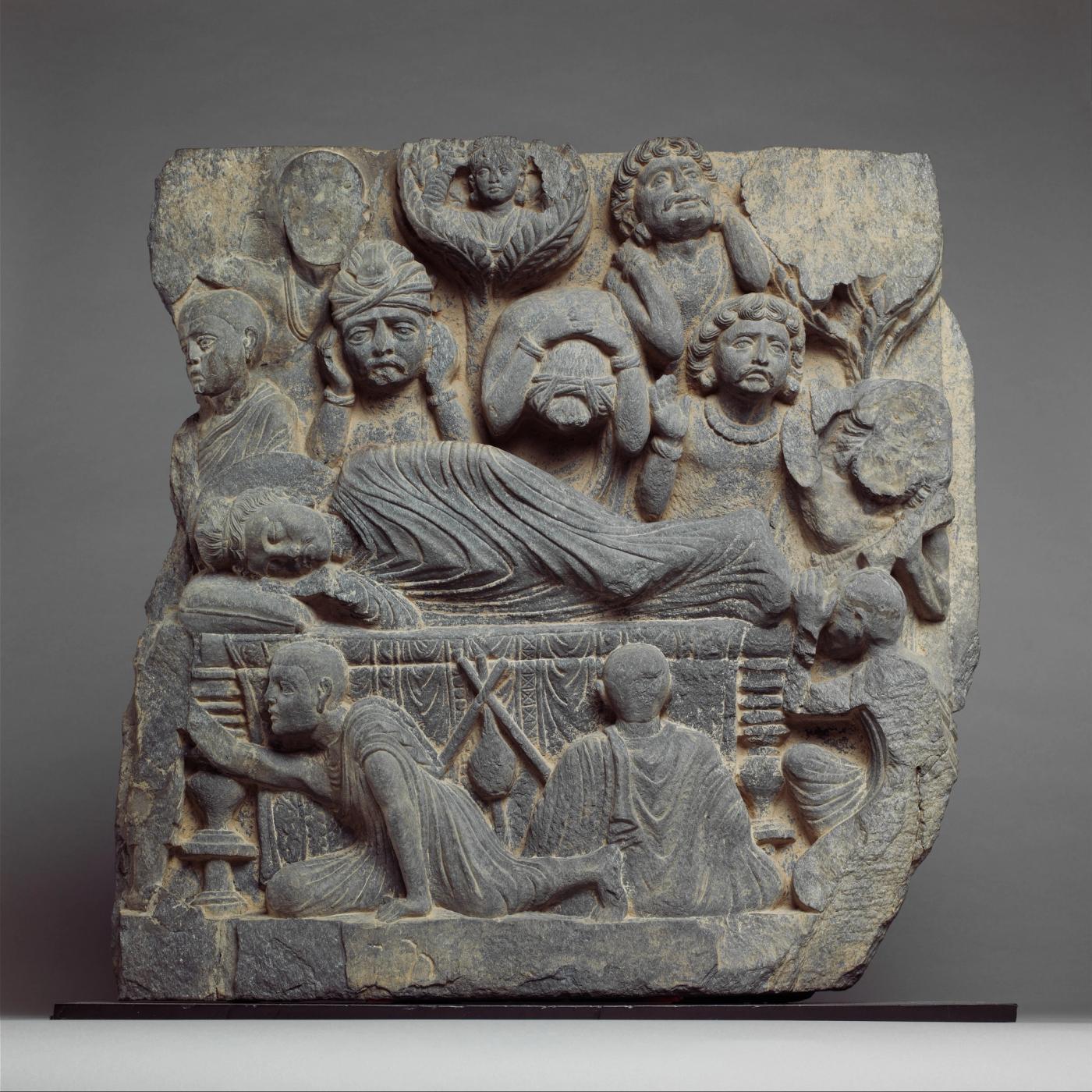
Gandhara occupies a unique place in the history of the Indian subcontinent and the greater Eurasian world.
A civilization, read closely.
Gandhara occupies a unique place in the history of the Indian subcontinent and the greater Eurasian world.
Among the many currents of Hindu thought, one idea stands apart for its audacity and power: the belief that the ultimate reality itself is feminine.
Among the Sindhi community, scattered across India, Pakistan, and the global diaspora, the figure of Jhulelal occupies a central place.
High on the spine of Asia lies a land of mountains, windswept plateaus, sacred lakes, and monasteries clinging to cliffsides.
Navaratri, the festival of nine nights, celebrates the eternal feminine power of Shakti in her nine forms, known as the Navadurga.
The Birth of a Kingdom in Bengal Before the 7th century CE, Bengal was not united under one ruler.
Among the great intellectuals of ancient India, few figures stand as tall as Panini. While kings and conquerors left monuments that weathered and crumbled, Panini left behind a work of pure thought: the Ashtadhyayi, an…
When the history of medieval India is told, few figures are as shadowed by legend as Jaichandra of Kannauj (c. 1170–1194 CE).
A Capital Born on the River’s Edge On the western bank of the Ganga, where the sacred river bends gently before stretching eastward toward Bengal, rose a city that would become the envy of kings and the obsession of…
When we think of ancient Indian capitals, names like Pataliputra, Ujjain, or Kannauj come quickly to mind.
When we think of the great rulers of the subcontinent, names like Ashoka, Chandragupta Maurya, and Akbar dominate the imagination.
On the windswept Coromandel Coast of Tamil Nadu, where the Bay of Bengal crashes against granite outcrops, rises a city of stone.
On the banks of the Yamuna River in present-day Uttar Pradesh lies Mathura, one of India’s oldest and most storied cities.
In the long arc of Indian history, few rulers embody the fusion of political power and cultural radiance as vividly as Chandragupta II (c. 375–415 CE), better known by his legendary epithet Vikramaditya.
Few figures in medieval Indian history evoke as much controversy as Mahmud of Ghazni (971–1030 CE). To some Persian chroniclers, he was the “Sword of Islam,” a champion who spread faith and empire.
In the fertile valley where the Swat and Kabul rivers meet before joining the Indus once lay Pushkalavatī—“the city of Pushkala.” Today it is a quiet field of ruins at Charsadda, but in antiquity it was the proud…
On the banks of the Ganga, where the river bends gently northward, lies Varanasi—the city the ancients called Kashi, “the Luminous One.” Few places on earth have been so continuously inhabited, or so richly layered with…
In the rolling hills of what is today northern Pakistan, where the Margalla range breaks into fertile valleys, lie the ruins of a city that once stood at the beating heart of ancient civilization.
Among the most revered figures in Indian civilization, Bhagwan Krishna occupies a central place in religion, philosophy, literature, art, and cultural identity.
The Char Dham — Badrinath (North), Dwarka (West), Puri (East), and Rameswaram (South) — is more than a route for devout Hindus.
1. Introduction The Partition of India in 1947 was one of the most significant and traumatic events in the modern history of South Asia.
Ujjain: Geography and Timeless Position Ujjain lies on the serene banks of the Shipra River in central India’s Madhya Pradesh.
Dashavataras: Vishnu Incarnates to Restore Cosmic Order In Hindu tradition, Vishnu doesn’t just watch over the universe—he steps into it.
Pantheon: TrimurtiOther Names: Narayana, Hari, Govinda Who is Vishnu? If Brahma builds the universe, Vishnu keeps it alive.
Pantheon: TrimurtiOther Names: Prajapati, Svayambhu In Hindu cosmology, the universe is maintained by a divine trinity known as the Trimurti: Brahma the creator, Vishnu the preserver, and Shiva the destroyer.
Imagine a world where a simple forest girl captures the heart of a mighty king, where curses erase memories, and where love survives separation, despair, and time itself.
In the mythological traditions of South Asia, few figures embody divine allure and artistic perfection like the Apsaras.
In the rich culture of Indian religious thought, Gandharvas stand out as celestial beings devoted not to war or wisdom, but to art, music, and aesthetic power.
Origins of Martial Arts When examining the origins of martial arts, most people think of East Asia, where styles like Kung Fu and Karate have become global icons.
Who Was Kalidasa? The Poet-Playwright Who Defined Sanskrit Literature Kalidasa stands as one of the greatest poets and dramatists in world literature.
When we speak of Rome, Babylon, or Chang’an, we evoke images of grandeur, conquest, and influence.
Every year, North India witnesses a river of orange – streams of devotees, barefoot, carrying decorated bamboo poles with pots hanging at both ends.
Located atop the Dângrêk Mountains on the Cambodia-Thailand border, Preah Vihear Temple is an architecturally significant and politically contentious site in Southeast Asia.
🏛️ Introduction The Roman Empire was a titan of antiquity—a vast dominion that shaped the political, architectural, cultural, and economic destiny of Europe and the Mediterranean world.
Kashmir, nestled in the lap of the Himalayas, was once a flourishing cradle of Indian civilization. It was a bastion of Hinduism and later a major center of Mahayana Buddhism.
The Greatest Empire in Sri Lanka’s History – The Kingdom of Anuradhapura Sri Lanka is home to a rich and diverse history, filled with powerful kingdoms that shaped its cultural and political landscape.
The Mughal Empire witnessed one of its most defining battles on May 29, 1658, when the Battle of Samugarh determined the fate of its throne.
Early Life and Background Dara Shikoh was born on March 20, 1615, in Ajmer, Rajasthan, as the eldest son of Mughal Emperor Shah Jahan and Empress Mumtaz Mahal.
Maharana Sangram Singh, better known as Rana Sanga (1482–1528), was one of the most formidable Rajput rulers of Mewar.
The Kurus were one of the 16 Mahajanapadas (great kingdoms) that existed during the later Vedic and early historical periods of India.
The Bharata dynasty is one of the most significant royal lineages in Indian history, forming the foundation of the Kuru dynasty and playing a pivotal role in the Mahabharata.
Origins of the Kuru Dynasty: From the Lunar Lineage to King Kuru The Kurus were one of the 16 Mahajanapadas (great kingdoms) that existed during the later Vedic and early historical periods of India.
Aryabhata (476 CE – 550 CE) was one of the most brilliant mathematicians and astronomers of ancient India.
Barsane Wali Holi Holi, the festival of colors, is celebrated with immense enthusiasm across India, but nowhere is it as unique and captivating as in Barsana, a small town in Uttar Pradesh.
Holi, known as the festival of colors, is one of the most vibrant and joyous festivals celebrated across India and by Indian communities worldwide.
Lalitaditya Muktapida (r. 724–760 CE) was the most distinguished ruler of the Karkota Dynasty, whose reign marked the zenith of Kashmir’s political, economic, and cultural influence.
The Khalji Dynasty The Khalji dynasty was a prominent ruling power in medieval India, known for its Turko-Afghan origins.
Wootz steel represents a seminal achievement in early metallurgical science, distinguished by its unique microstructure and superior mechanical properties.
King Ajatshatru, His Queen, and His Minister Varshakara, Kizil, Maya Cave, (Cave 224) | Kucha Kingdom (located in present-day Xinjiang Uyghur Autonomous Region, China).
The Buddhist Kuchi Kingdom, also known as the Kucha Kingdom, was a significant center of Buddhism on the northern Silk Road and once stood as a beacon of culture, spirituality, and commerce.
The Ahom Dynasty is one of the most influential and enduring regimes in the history of northeastern India.
The Ahom Dynasty of Assam is renowned for its military resilience, particularly in its successful defense against the mighty Mughal Empire.
Swastika: The Timeless Emblem of Divinity and Auspiciousness The Swastika is one of the oldest and most widespread symbols in human history, deeply embedded in the cultural, religious, and artistic traditions of various…
Battle of Aror, Fought in 711 CE The Battle of Aror (711 CE) was not just a military confrontation but a civilizational rupture—a clash between two vastly different worldviews: the Dharmic civilization of Sindh and the…
Arab forces on horseback invading Sindh in the 8th century The history of India is woven with diverse cultures, religions, and rulers.
Buddha : The Life and Legacy of Siddhartha Gautama Siddhartha Gautama, known as the Buddha, is one of the most revered spiritual leaders in history.
Buddha, Gandhara Art Buddhism, a complex and multifaceted religious and philosophical tradition, has significantly shaped the cultural and intellectual landscapes of multiple civilizations over the past 2,500 years.
King Jayapala (964–1001 CE) of Hindu Shahi Dynasty Jayapala: The Warrior King Who Resisted the Ghaznavids The Hindu Shahi dynasty, ruling parts of present-day Afghanistan and northwestern India, played a crucial role in…
Kumarajiva (Sanskrit: कुमारजीव, 344–413 CE) was a distinguished Buddhist monk, scholar, and translator who played a seminal role in the dissemination of Buddhist thought in China.
Origins and Background The Delhi Sultanate (1206–1526 CE) was a Muslim kingdom that ruled large parts of the Indian subcontinent.
Tandav, also spelled Tandava, is a powerful and dynamic dance form associated with Lord Shiva, one of the principal deities in Hinduism.
Maha Shivaratri, meaning “The Great Night of Shiva,” is one of the most significant Hindu festivals dedicated to Bhagwan Shiva.
Mughal Emperor Akbar the Great, also known as Jalal-ud-din Muhammad Akbar, was one of the most complex and influential rulers in Indian history.
Hindu Shahi Dynasty The Hindu Shahi dynasty is one of the most fascinating yet often overlooked periods in South Asian history.
Aurangzeb Versus Marathas The conflict between Mughal Emperor Aurangzeb and the Marathas was one of the longest and most significant struggles in Indian history.
Uncovering the Legacy of The Indian Revolutionary Leader Subhas Chandra Bose remains one of the most influential, yet often overlooked, figures in India’s struggle for independence.
The Arab conquest of Sindh in 711 CE, led by Muhammad bin Qasim, marked a significant turning point in Indian history.
Aurangzeb, one of the most controversial figures in Indian history, was the sixth emperor of the Mughal Empire, ruling from 1658 to 1707.
Chhatrapati Shivaji Maharaj Chhatrapati Shivaji Maharaj Chhatrapati Shivaji Maharaj stands as one of the most visionary and influential leaders in Indian history.
Introduction to the Mahabharata The Mahabharata is one of the greatest epics of ancient India, attributed to the sage Vyasa. Comprising over 100,000 shlokas, it is one of the longest epic poems in the world.
Mughal-Maratha Conflict: How the Marathas Took Over and Established Hindu Swarajya The Mughal-Maratha conflicts shaped the course of Indian history, marking the decline of the once-mighty Mughal Empire and the rise of…
Introduction Sati Mata, also known as Goddess Sati, is a central figure in Hindu mythology, symbolizing devotion, sacrifice, and divine feminine energy.
Saraswati Mata, revered as the Hindu goddess of wisdom, learning, arts, music, and speech, is one of the most significant deities in Hinduism.
Sambhaji Maharaj, the second Chhatrapati of the Maratha Empire, played a crucial role in shaping Indian history.
Between the 7th and 10th centuries CE, India witnessed the rise of the Bhakti movement, a significant socio-religious transformation that reshaped Hinduism and left an indelible impact on Indian culture.
Charles Cornwallis, 1st Marquess Cornwallis (1738–1805), remains one of Britain’s most multifaceted figures.
Hindu mythology is filled with fascinating deities, each symbolizing different cosmic forces and aspects of life. Among them is Goddess Chhaya, the shadowy yet powerful consort of Surya Deva (the Sun God).
Shani Dev, also known as Shani Maharaj, is a powerful deity in Hindu mythology, revered as the god of justice and karma.
Meenakshi Temple, Madurai The Meenakshi Amman Temple in Madurai, Tamil Nadu, is one of India’s most significant and revered temples.
Surya The Sun God Surya, revered as the Sun God in Hinduism, embodies the source of life, light, and cosmic energy.
In the Hindu Trimurti, Shiva plays the role of the destroyer—but that label barely scratches the surface. Shiva is not just a cosmic ender.
The Kumbh Mela is the largest religious gathering in the world, attracting millions of devotees, saints, and spiritual leaders.
1. Hinduism Explained: Origins and Development Indus Valley Civilization Archaeological Evidence and Early Religious Practices The Indus Valley Civilization, one of the world’s earliest urban cultures, is considered by…
Konark Sun Temple: An Incredible Marvel of Hindu Architecture, Science, and Resilience (Built – 13th Century) Hindu temple architecture stands as one of the most remarkable and enduring facets of Indian culture…
Why is Republic Day celebrated in India on 26th January? Republic Day, celebrated on 26th January, marks a defining moment in India’s history.
Chatra Navaratri and Sharad Navaratri: Differences Explained Navaratri, the vibrant festival dedicated to the worship of Goddess Durga, is celebrated twice a year in India.
Punjab, often referred to as the “Granary of India” or the “Land of Five Rivers,” is a vibrant state in northern India.
Meaning of the word Pundit A pundit refers to a person who is considered an expert in a particular field and is often called upon to give opinions or commentary, especially in the media.
Why the 144-Year Milestone Makes Maha Kumbh Mela 2025 a Once-in-a-Lifetime Event? The Maha Kumbh Mela 2025 is poised to be one of the most remarkable gatherings in the event’s long history, not just because of its scale…
Max Müller, a pioneering scholar of Indology, occupies a prominent place in the study of Indian culture, religion, and languages.
Himachal Pradesh, known as the “Land of the Gods,” is a serene and picturesque state nestled in the lap of the Himalayas in northern India.
Jati, Varna, and Gotra: The Roots of Indian Social Structures The concepts of Jati, Varna, and Gotra form an integral part of Indian social traditions, but their meanings have often been distorted through colonial…
Cannabis in the Himalayan Region The Himalayan region, stretching across northern India, Pakistan, and Afghanistan, is one of the oldest and most significant areas for the growth of cannabis.
Delhi, the capital city of India, is one of the oldest continuously inhabited cities in the world, with a history spanning over 2,500 years.
The Kannauj Triangle is one of the most fascinating episodes in medieval Indian history, marked by a prolonged struggle among three major empires: the Gurjara-Pratiharas, the Palas, and the Rashtrakutas.
Kartikeya, known by various names like Murugan, Skanda, Subrahmanya, and Shanmukha, is a prominent deity in Hindu mythology.
The Pala Dynasty (8th–12th centuries CE) stands as one of the most influential dynasties in Indian history.
Harsha Vardhana The decline of the Gupta Empire in the 6th century CE left northern India fragmented into numerous smaller kingdoms. Amid this period of political turmoil, Harsha Vardhana emerged as a unifying figure.
The period between the 7th and 10th centuries CE witnessed the rise of dynamic maritime trade networks in the Indian Ocean.
The Rashtrakuta dynasty (8th–10th centuries CE), one of India’s most powerful and culturally influential empires, made remarkable contributions to art, architecture, and religion.
Indian history between the 7th and 10th centuries CE was marked by remarkable political rivalries and cultural efflorescence.
The Untold Story of Qutub Minar: Built on the Ruins of Hindu and Jain Temples The Qutub Minar, an iconic structure and UNESCO World Heritage Site in Delhi, stands tall as a testament to the architectural brilliance of…
The Pandyan Empire, one of the ancient Tamil dynasties of South India, is a unique example of longevity and cultural flourishing.
Guru Gobind Singh, the tenth and last human Guru of Sikhism, stands as a towering figure in Indian history.
Introduction The Kumbh Mela is one of the most extraordinary religious gatherings on Earth, where millions of devotees converge to celebrate faith, spirituality, and cultural tradition.
Siege of Chittorgarh 1303 The Siege of Chittorgarh in 1303 is one of the most significant events in medieval Indian history, representing the culmination of Sultan Alauddin Khilji’s expansionist ambitions and the…
The elections held in India before its independence in 1947 marked critical milestones in the nation’s political history.
History often remembers rulers as either visionaries or tyrants, but Muhammad bin Tughlaq, the Sultan of Delhi from 1325 to 1351, defies such simplistic categorization.
Introduction The East India Company (EIC) began as a modest trading venture in 1600 and grew into a global power that controlled vast territories and shaped the course of world history.
Atal Bihari Vajpayee was a leader whose legacy transcends political boundaries, earning him admiration across India and the world.
Sardar Vallabhbhai Patel, often revered as the “Iron Man of India,” stands as a symbol of unwavering determination, dedication, and diplomacy.
In Hinduism, Vayu, the god of wind, holds a vital place in maintaining cosmic order and the rhythm of life.
Diwali, also known as Deepavali, is a festival that symbolizes the triumph of light over darkness, good over evil, and knowledge over ignorance.
While Dussehra is celebrated across India with varying traditions, the Kullu Dussehra stands out for its grandeur and cultural significance.
Dussehra, also known as Vijayadashami, is one of India’s most revered and widely celebrated festivals. It marks the ultimate victory of good over evil, commemorating the triumph of righteousness over wrongdoing.
India’s rich history is full of powerful dynasties that have shaped its cultural, political, and economic landscape.
1. Early Life and Education Mohandas Karamchand Gandhi, later known as Mahatma Gandhi, was born on October 2, 1869, in Porbandar, Gujarat.
Chamunda Mata is a powerful and fierce aspect of Goddess Durga, embodying the destructive energy of the divine feminine, or Shakti.
The Story of Shumbha and Nishumbha from Devi Mahatmya The tale of Shumbha and Nishumbha is one of the most well-known stories of good triumphing over evil in Hindu mythology.
Hinduism is home to a vast array of sacred texts that explore the relationship between gods and humans, good and evil, and the universe’s eternal cycles of creation and destruction.
The Nagas hold a prominent place in indian mythology, religious traditions, and history. Revered as serpent deities, the Nagas have been worshipped across India for centuries, embodying both benevolent and fearsome…
Kashmir, often referred to as the “paradise on Earth,” holds a significant place in indian civilizational history due to its rich cultural, religious, and political legacy.
Scene of The Kurukshetra War From The Mahabharata Ancient Indian Wars (3500 BCE–200 CE) – Introduction: The early history of the Indian subcontinent is marked by a series of monumental wars and conflicts that shaped its…
The Taj Mahal, located in Agra, India, is one of the most magnificent monuments in the world, recognized universally as a symbol of eternal love.
The Ramayana holds an unparalleled place in Indian culture and religion, shaping art, dance, theater, and literature for centuries.
Rani Ki Vav, (UNESCO World Heritage Site) an intricately designed and beautifully preserved stepwell, is an architectural masterpiece in Gujarat, India.
Kushan Empire In the ancient world, several empires connected far-reaching civilizations, creating networks of trade, religion, and culture. One of the most fascinating, yet often overlooked, is the Kushan Empire.
The Kailasa Temple: Shiva’s Mountain Brought to Life in Stone The Kailasa Temple, part of the Ellora Caves in Maharashtra, India, is one of the most remarkable ancient structures in the world.
Ramayana The Ramayana is a treasure trove of timeless themes and moral lessons that continue to resonate with readers and listeners across generations.
The Marathas were one of the most formidable powers in Indian history, rising from the rugged terrain of the Deccan plateau to build a vast Maratha empire that stretched across much of the subcontinent.
1. Introduction to Sikhism Sikhism is one of the youngest of the major world religions, having been founded in the 15th century by Guru Nanak Dev Ji in the Punjab region of the indian subcontinent.
Panipat’s Deadly Legacy The three Battles of Panipat (1526, 1556, and 1761) are among the most important military engagements in Indian history.
Ancient Universities of India were pioneering institutions that shaped the intellectual landscape of not just the subcontinent but also the world.
British Shimla: Society, Politics, and Culture Shimla, the “Queen of the Hills,” was a significant center of British colonial power in India from the mid-19th to the early 20th century.
Angkor Wat: Symbol of Khmer Greatness The crown jewel of Cambodia’s ancient Khmer Empire, stands as one of the most iconic and awe-inspiring religious monuments in the world.
How Indra (The King of Heaven) Lost His Kingdom and Won It Back: A Story of Pride, Redemption, and Divine Intervention In the vast realm of Hindu mythology, few stories capture the intricate play of divine power, pride…
Suryavanshi The Suryavanshi (Solar Dynasty) refers to the lineage of kings and rulers who claim descent from Surya, the Hindu Sun God. This dynasty is one of the most celebrated in Hindu mythology and Indian history.
The Natyashastra is one of the most ancient and profound texts on performing arts, originating in India and believed to be composed between 200 BCE and 200 CE.
Hinduism is a vast and diverse religion, with various paths to spiritual realization. Among the many ways Hindus express their devotion, four primary sects stand out: Shaivism, Vaishnavism, Smartism, and Shaktism.
The Khmer Empire (802–1431 CE) was one of Southeast Asia’s most powerful and influential civilizations.
The Kingdom of Magadha, located in present-day Bihar in India, holds immense significance in ancient Indian history due to its strategic position along the Ganges River and its role in shaping early Indian political…
The Puranas, a significant body of ancient Indian literature, form one of the cornerstones of Hindu religious and cultural traditions.
Battle of Plassey The Battle of Plassey, fought on June 23, 1757, is considered one of the most important battles in Indian history.
Navratri – A Deep Dive into India’s Festival of Nine Nights Navratri is one of the most widely celebrated and significant Hindu festivals in India, observed with great fervor across different regions.
What are Shakti Peeths? Divine Seats of Goddess Shakti Shakti Peeths are revered holy sites in Hinduism, dedicated to the Goddess Shakti, the Divine Feminine.
Who Was Bappa Rawal? Bappa Rawal, also known as Kalbhoj, was a legendary king of Rajasthan and the founder of the Mewar dynasty.
High in the Himalayas blooms a flower of profound significance – the Brahma Kamal. Known for its rare beauty, spiritual symbolism, and medicinal properties, this flower has captivated the hearts and minds of people for…
Netaji Subhas Chandra Bose: The Unwavering Patriot and Revolutionary Leader Netaji Subhas Chandra Bose is a towering figure in the annals of India’s freedom struggle.
The Indian Independence Movement The Indian Independence Movement, which culminated in the creation of the sovereign nations of India and Pakistan in 1947, was a complex, multifaceted struggle that spanned nearly two…
Airawat, also known as Airavata, holds a unique and revered place in Hindu mythology as the divine elephant that serves as the mount (vahana) of Lord Indra, the king of the gods and the ruler of the heavens.
The Samudra Manthan The Samudra Manthan, or the Churning of the Ocean of Milk, is one of the most captivating and symbolic episodes in Hindu mythology.
The early 19th century saw the expansion of the Gorkha Empire into parts of northern India, specifically the regions now known as Himachal Pradesh and Uttarakhand.
The Dark Chapter in Aviation History On December 24, 1999, the world witnessed one of the most terrifying and consequential hijackings in aviation history.
Prithvi: The Hindu Goddess of Earth Prithvi, also known as Prithvi Mata (Mother Earth), is one of the most revered goddesses in Hindu mythology, symbolizing the earth and its nurturing, life-giving qualities.
The Eternal Legacy of Hampi: A City Carved in Time Hampi, a UNESCO World Heritage Site located in the southern Indian state of Karnataka, is an archaeological treasure trove that stands as a testament to the grandeur…
The Panchabhutas: Overview of Hindu Cosmology Hinduism, one of the oldest religions in the world, is deeply intertwined with nature and the elements.
In the sacred hymns of the Rigveda, the earliest scripture of Hinduism (c. 1500–1200 BCE), the very first verse is addressed not to a supreme sky-god or creator, but to Agni — the divine fire.
King of the Gods (Devaraja) Indra, one of the most ancient and revered deities in Hinduism, is often depicted as the god of lightning, thunder, and rain.
Neem Karoli Baba Early Life and Spiritual Journey Birth and Early Years: Neem Karoli Baba, originally named Lakshman Narayan Sharma, was born around 1900 in Akbarpur, Uttar Pradesh.
Raja Dahir: The Last Hindu King of Sindh Raja Dahir was the last Hindu King of Sindh, an area that is now part of modern-day Pakistan.
Draupadi Tying Rakhi to Bhagwan Krishna Introduction Raksha Bandhan, often simply called Rakhi, is a widely celebrated festival in India and other parts of South Asia.
Four Scenes from the Life of the Buddha – Kushan dynasty, 2nd Century CE, Gandhara (Modern Day Afghanistan) Buddhist Hindu Kingdoms Of Afghanistan Ancient Afghanistan: A Cultural Melting Pot Afghanistan has a rich and…
Ramayana: Rama’s Journey The Ramayana is one of the most revered and enduring epics in the world, narrating the life and adventures of Prince Rama, his wife Sita, and his loyal brother Lakshmana.
The Majestic Temples of Khajuraho Nestled in the heart of Madhya Pradesh, the Khajuraho Group of Monuments stands as a testament to the rich cultural and artistic heritage of ancient India.
Outline Introduction Overview of the Upanishads Their place within Hindu scripture Historical and Philosophical Context Development during the later Vedic period The shift from ritualism to philosophical inquiry Core…
Introduction to the Vedas The Vedas are the oldest and most authoritative scriptures in Hinduism, forming the bedrock of its spiritual and religious traditions.
The Bhagavad Gita The Bhagavad Gita, often referred to simply as the Gita, is one of the most revered texts in Hinduism and is considered a spiritual and philosophical guide for millions of people around the world.
I. The 1971 Bangladesh Liberation War The 1971 Bangladesh Liberation War, leading to the creation of Bangladesh, is a pivotal event in South Asian history.
The Mauryan Empire, established by Chandragupta Maurya in 321 BCE, marked a significant period in ancient Indian history, becoming one of the largest empires of its time.
I. Overview of rich cultural and Scientific Achievements of Ancient India Ancient India, a land of profound wisdom and remarkable innovation, has left an indelible mark on the world through its cultural and scientific…
Schools of Thought in Hinduism Philosophy occupies a central place in Hinduism, offering profound insights into the nature of reality, the self, and the universe.
Hinduism is the world’s oldest continuously practiced religion, deeply embedded in the culture and history of the Indian subcontinent.
Introduction Tipu Sultan, the ruler of the Kingdom of Mysore from 1782 to 1799, is a prominent figure in Indian history.
1. Kumaragupta I: The Gupta Dynasty’s Stabilizer Kumaragupta I, also known as Mahendraditya, was one of the most notable rulers of the Gupta Dynasty, which is often referred to as the Golden Age of India.
Nestled in the historical state of Bihar, India, Nalanda University stands as a testament to the rich educational and cultural heritage of ancient India.
Destruction of Nalanda University The 12th and 13th centuries were times of immense upheaval in the Indian subcontinent, defined by foreign invasions that sought not only to conquer but also to erase the indigenous…
Enchanting Location of Hatkoti: Nestled amidst the serene and picturesque landscapes of Himachal Pradesh, the Hatkoti Temple stands as a timeless emblem of spiritual reverence and architectural brilliance.
Timur’s Invasion of India : Intro In the annals of history, few invasions have been as catastrophic and brutal as Timur’s invasion of India in 1398.
Buddha Poornima, also known as Buddha Purnima (Vaiśākha pūrṇimā वैशाख पूर्णिमा ), is a significant festival for Buddhists worldwide.
Rai Bahadur Sir Ganga Ram (born Ganga Ram Agarwal; 13 April 1851 – 10 July 1927) In the annals of South Asian history, few names stand as tall as that of Sir Ganga Ram, whose life and work have left an indelible mark on…
Khatu Shyam JI Khatu Shyam Ji Temple: The Khatu Shyam Ji Temple, also called the Barbarik Temple, is located in Khatu village, Sikar district, Rajasthan, India.
1. What Are the Foundations of Ancient Indian Astrology? Astrology in India, known as “Jyotish,” is a millennia-old practice intertwined with the country’s cultural and spiritual fabric.
Indian Religions Syncretic Nature In the vibrant landscape of Indian spirituality, one finds a rich culture woven with threads of diverse beliefs, practices, and philosophies.
Motihari is a historically significant city located in the East Champaran district of the Indian state of Bihar.
Introduction: The Indian electoral landscape is a tapestry woven with the threads of democracy, diversity, and determination.
Sun Temple (Surya Mandir): Illuminating the Divine: The Sun holds a revered place in Hindu mythology, symbolizing the source of light, energy, and life itself.
Few words from India have traveled as far and wide as Yoga. Today, it conjures images of mats and postures in gyms and studios across the world. But in its origins, Yoga was never just physical exercise.
Introduction: Ram Navami Ram Navami, a sacred Hindu festival, commemorates the birth anniversary of Lord Rama, the seventh avatar of the Hindu god Vishnu.
List of Famous Churches in India Embark on a journey through India’s spiritual landscape as we explore ten revered churches. From the majestic Basilica of Bom Jesus to the serene St.
Introduction: Bochasanwasi Akshar Purushottam Swaminarayan Sanstha (BAPS) is a revered Hindu organization that has left an indelible mark on the spiritual and cultural landscape, not only in India but across the globe.
The 26/11 Mumbai Attacks: A Dark Day in India’s History The 26/11 Mumbai attacks, also known as the Mumbai terror attacks, was one of the worst terror attacks in the history of India.
1. Understanding Mahasu Devta Mahasu Devta holds a significant place in the ethos of Himachal Pradesh and Uttarakhand. This revered deity symbolizes protection and strength, deeply revered among the Pahadi communities.
Understanding Hindu Concepts: Devi, Devta, Bhagwan, Ishvara, and Brahman Hinduism, one of the world’s oldest religions, encompasses a variety of profound concepts that explore the nature of the divine, the self, and the…
Indus Valley The Indus Valley Civilization (IVC), also known as the Harappan Civilization, was one of the world’s earliest urban cultures, flourishing between 2600 BCE and 1900 BCE.
Introduction: What is Diwali? Diwali, also known as the “Festival of Lights,” is one of the most significant and widely celebrated festivals in India and among Hindus globally.
Dhanteras, also known as Dhanatrayodashi, marks the first day of the Diwali festival in India. This auspicious day is celebrated with great enthusiasm and is significant for Hindus across the country.
Siege of Chittorgarh – Introduction The Siege of Chittorgarh, which unfolded between 1567 and 1568, stands as a poignant chapter in Indian history, showcasing the clash of two mighty forces—the Mughal Empire under…
50 Frequently Asked Questions About Hinduism Here is an expanded list of 50 frequently asked questions about Hinduism that cover Core Beliefs and Concepts, Practices and Rituals, Sacred Texts and Literature, Dietary and…
Facts about Sharad Navratri Festival Navratri, a fervently celebrated Hindu festival, resonates with great zeal and enthusiasm in diverse regions of India every year.
Introduction Hindu culture is filled with a wealth of traditions and spiritual practices, one of the most profound being Shradh and Pitra Paksha.
Bharatiya Janata Party (BJP), Often referred to as the BJP, is one of India’s major political parties and has played a pivotal role in shaping the nation’s political landscape.
Tirta Empul Magnificent Indonesia’s Hindu Civilization Indonesia’s Hindu Civilization is one of the oldest and most fascinating cultures in the world.
Introduction Adi Shankaracharya, one of the most remarkable philosophers and spiritual luminaries in the history of India, left an indelible mark on Hinduism and its philosophical landscape.
A Pioneering Democratic Triumph The year 1951 marked a pivotal moment in the history of India, as the nation took its first steps toward democracy following centuries of colonial rule.
Introduction to Sanatan Dharma In a world where diverse belief systems shape the fabric of societies, the open and secular nature of Sanatan Dharma, often referred to as Hinduism, shines as a beacon of pluralism and…
King Narasimhadeva I: In the annals of Indian history, certain rulers stand out not just for their temporal power but for their profound impact on the cultural and artistic landscape of the nation.
Introduction Before the emergence of the Mughal Empire in the early 16th century, the Indian subcontinent was a patchwork of regional kingdoms, with the Delhi Sultanate as the predominant power in the north.
The Mughal Empire, celebrated for its cultural and architectural magnificence, bears the hidden scars of a somber history marked by religious persecution, cruelty, and oppressive anti-Hindu policies.
I. Introduction The Gupta Empire, often celebrated as India’s Golden Age, marks a period of exceptional cultural, scientific, and political advancements.
The Indosphere refers to the vast cultural, philosophical, and spiritual influence that originated from the Indian subcontinent and spread across Asia, reaching as far as East Asia, Southeast Asia, Central Asia, and…
The Sacred Birthplace of Lord Krishna Krishna Janambhoomi, located in Mathura, Uttar Pradesh, is revered as the birthplace of Lord Krishna.
Celebrating the Divine Birth of Lord Krishna Janmashtami, a significant Hindu festival, is celebrated with immense devotion and zeal across India and around the world.
India is not just a country; it is a civilisation that has carried multiple identities across time, languages, and worldviews.
Introduction: The linguistic reorganization of India stands as a pivotal moment in the country’s history, reflecting its commitment to accommodating linguistic and cultural diversity within its political framework.
Introduction The Konark Sun Temple, situated in the coastal town of Konark in Odisha, India, stands as a remarkable testament to India’s rich heritage, architectural grandeur, and scientific ingenuity.
Indian National Congress – A Historical Overview Introduction Brief overview of the Indian National Congress (INC) Importance in Indian political history Purpose of the article Origins of the Indian National Congress…
The Taj Mahal: A Masterpiece Shrouded in Controversy and Tragedy The Taj Mahal, often hailed as the most beautiful building in the world, represents a delicate interplay between love, art, and power.
The Indian National Army (INA), a pivotal force in India’s struggle for independence, remains one of the most underappreciated yet crucial aspects of the nation’s history.
Introduction Hinduism, one of the world’s oldest and most diverse religions, is characterized by its rich tapestry of beliefs, rituals, and practices.
1. Introduction: In the vast tapestry of Hindu mythology, gods and goddesses symbolize various aspects of life, nature, and human experience.
The Kalinga War (c. 261 BCE): Causes & Consequences The Kalinga War of 261 BCE is remembered as a pivotal moment in ancient Indian history.
Introduction Nestled deep within the lush hills of Maharashtra, India, lies a mesmerizing archaeological wonder that has stood the test of time – the Ajanta Caves.
Introduction to Indus Valley Civilization The Indus Valley Civilization, often referred to as one of the world’s earliest urban civilizations, holds a place of significance in the annals of history.
During Navaratri, Jagadamba is worshiped for nine days, during which Maha Ashtami and Mahanavami are of special significance.
The eighth day of Navratri is dedicated to Maa Mahagauri the eighth form of Maa Durga. Devi Bhagvat Purana states that nine forms and ten Mahavidhyas are all parts of Adishakti, but Mahagauri always resides with Mahadev…
Maa Kalaratri, the seventh manifestation of Goddess Durga, is revered for her fierce and protective form. She is also considered a form of Parvati, the consort of Lord Shiva.
The sixth day of Navratri is dedicated to the ferocious warrior avatar of Goddess Durga, known as Maa Katyayani.
On the fifth day of Navratri, Skandamata, Maa Durga’s fifth avatar, is worshipped. With the blessings of Maa Sakandmata, even an ignoramus person becomes wise.
The fourth day of the Navratri festival is dedicated to Goddess Maa Kushmanda, during which the fourth form of the nine incarnations of Goddess Durga is worshipped.
The third day of Navratri is dedicated to Maa Chandraghanta, the incarnation of Maa Durga in her third form.
The second day of Navratri is dedicated to Maa Brahmacharini, the second form of Maa Durga. The Hindu scriptures describe Maa Brahmacharini as wearing white clothes, having a garland of Ashtdal on her right hand, and a…
Navratri is one of the most revered Hindu festivals, celebrated with devotion across India and beyond.